
12-Piece Brush RFQs: Define the 220 g Weight Basis
For BYM’s 12pcs brush set, ask what the listed 220 g includes before using it in a quotation or packing plan. Separate brushes, confirmed accessories and packaging, and ask whether the figure is nominal or measured. Keep the supplier’s stated basis attached to the selected set and request actual packed weights separately where needed.
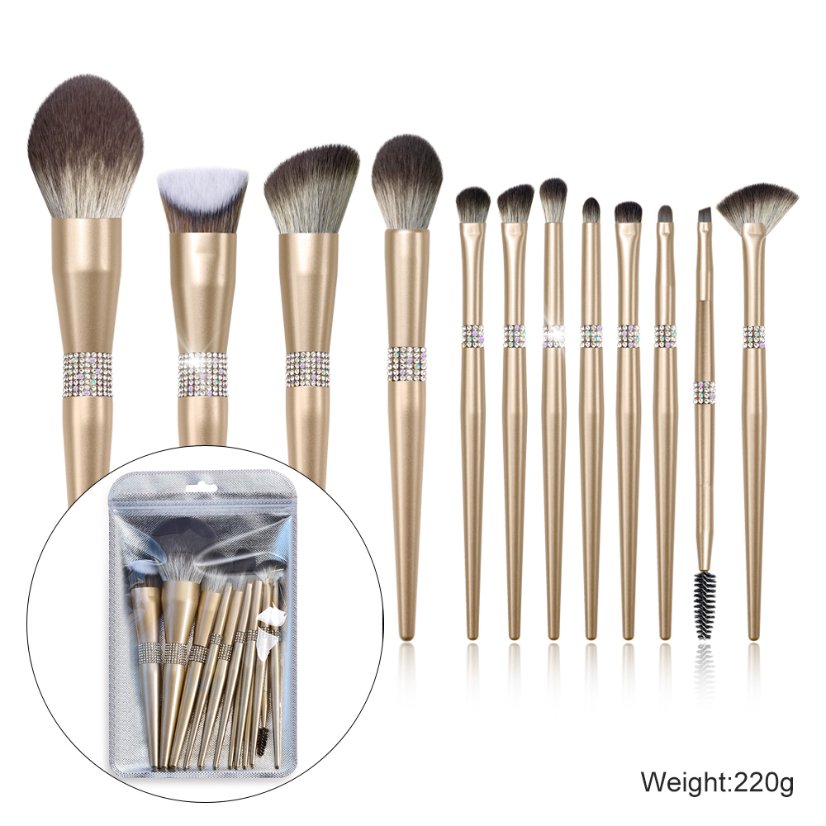
Official main image shows the brush assortment and a pouch inset beside Weight:220g wording. Ask the supplier which items and packaging are covered by that figure.
Start with the actual published weight
The Makeup brush set 12pcs page states “Weight: 220g.” Its main image repeats that wording beside an assortment view and a pouch inset. Those references give a wholesale daily brush sets buyer a concrete question: which combination of items was included in that weight?
The visible weight field does not separately name bare brushes, accessories or packaging. Ask the supplier to explain its scope against the actual offered set. Retain the published figure as the starting reference, without relabeling it as net product weight or shipping weight before receiving that explanation.
Name the unit being weighed
Create a small weight schedule with a description beside each requested figure. Identify the confirmed set contents, then ask which of those contents belong in each weighing arrangement. The schedule should make sense to someone who has not seen the catalogue image. A bare number and a product title are not enough to distinguish different arrangements.
Requested field
Scope to clarify
Reference to retain
Published 220 g
Which items does it include?
Supplier’s written explanation
Brush assortment
Are accessories and packaging excluded?
Named contents and arrangement
Packed selling unit
Which pack components are present?
Pack revision and weight basis
Outer carton
How many packed units are included?
Carton specification
Official brush-detail composition from the same listing. It helps identify the assortment under discussion, without assigning individual brush weights or proving material composition.
Make inclusions and exclusions explicit
Ask whether the weighing arrangement includes a pouch, protective sleeves, inserts, labels or another confirmed pack component. List only what the supplier actually proposes. An inset bag is a reason to ask about inclusion, rather than an automatic statement that it is supplied or included in the published figure.
If a container is used during weighing, agree how its weight will be excluded or reported. Keep that method beside the resulting figure. If the supplier gives a combined weight, retain that combined description instead of silently treating it as the weight of the brushes alone.
Separate a nominal figure from sample results
Ask whether 220 g is an approximate catalogue value, a nominal specification or a result for an identified sample. Request the supplier’s intended meaning and any proposed acceptance limits. A rounded catalogue number does not, by itself, define a tolerance or an acceptance rule for every delivered set.
For a sample weight response, identify the sample, contents, packaging state, units and method used. If the buyer requires repeated observations, agree the review scope with the supplier. Keep each observation attached to its arrangement rather than averaging figures that include different accessories or packaging.
Keep package levels separately named
A confirmed selling-unit weight still needs a clear relationship to the outer carton information. Ask for the number of packed units and the actual carton packing specification, including relevant packing components. Keep grams and kilograms explicitly labeled when information passes between purchasing and logistics teams.
Do not divide 220 g into equal individual brush weights or multiply it by the 12pcs title without first confirming its basis. Different brush forms and packaging components need their own identified scope. The logistics enquiry should use supplier-confirmed packed information for the actual order configuration.
When two offers describe their weights differently, ask both suppliers to restate them against the same schedule. Keep the original numbers with their original labels while waiting for clarification. A lighter quoted number may simply exclude an accessory or outer pack, so the purchasing comparison needs the included-item description as well as the figure.
Official assortment illustration with named tool shapes. Keep the confirmed inventory beside the weight enquiry; its labels do not define a weighing method or measured result.
Approve a weight basis with the sample
Use a sample approval checklist for daily brush sets that distinguishes the agreed weight basis from the contents check. Identify the sample and confirm that the included items match the schedule before comparing figures. Agree the weighing method and acceptance criteria before describing a result as acceptable.
Identify the set and sample revision.
List included and excluded pack components.
Name the weight type and measurement units.
Keep observations separate from nominal catalogue values.
Carry the accepted schedule reference onto the quotation. If the supplier proposes a changed pouch, assortment or packaging arrangement, ask which weight fields need updating. Send the published product link and weight questions through the supplier contact page so the response addresses this actual 12pcs offer.
Keep the evidence boundary clear
The 220 g figure is a supplier-published statement; no weighing was performed for this article. Catalogue images do not establish the supplied inventory, weight tolerance, fibre composition, softness, cosmetic results or safety. A supplier explanation and an identified sample result are different evidence types. Request any required product-specific declarations and supporting information separately, without converting this weight enquiry into broader product approval.
Frequently asked questions
Is 220 g the shipping weight?
The field does not identify that basis. Ask what it includes and request actual packed information separately.
Does the pouch inset confirm inclusion?
Ask the supplier to state whether the proposed selling unit includes it and whether its weight is included.
What belongs with a sample weight?
An identified sample, included contents, packaging state, measurement units and the agreed method.
daily brush setsweight basispacked unitRFQ