
Brush Storage: Define Each Material Component
What should a material request cover? A wholesale brush storage inquiry should identify the exact pouch and ask which components the supplier’s material description covers. Record the body, flap, inner face, carrying loop, and fastener separately where relevant. BYM’s Brush Storage page lists “PU Leather.” Use that published description to begin a component-specific conversation, then connect the supplier’s written response to the selected sample and quotation.
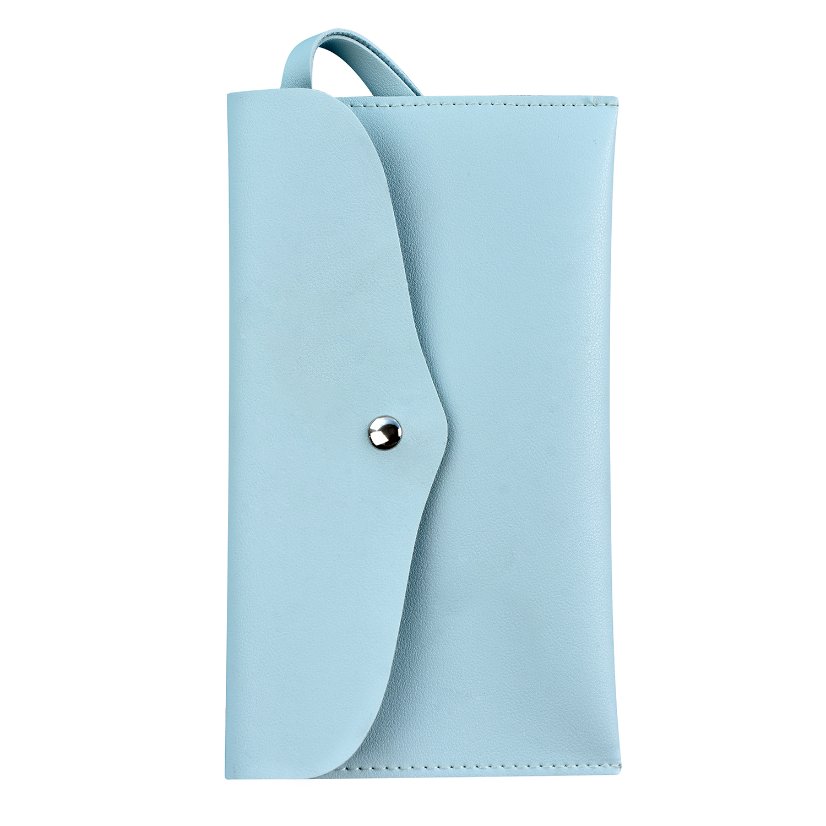
The blue gallery pouch shows the body, flap, loop, and fastener as separate visible areas. Its appearance does not establish each component’s composition.
Give the material statement a clear scope
The Brush Storage listing provides a broad material label rather than a breakdown of every part. Its gallery includes several color references and another pouch form. Select the exact reference before requesting details. Attach a product image and buyer item code, then ask the supplier to identify the material description that applies to that particular version.
Separate a description of the main body from descriptions of the other components. If one material applies to both body and flap, the supplier can record that explicitly. If the inner surface is the reverse of the body material, identify it that way; if a separate lining is present, give it its own entry. This avoids turning a short catalogue label into an assumed specification for the entire assembly.
Component reference
Question for the supplier
Body and flap
Which parts are covered by the published material description?
Inner face
Exposed reverse surface or a separately specified lining?
Carrying loop
Same material reference as the body, or a separate component?
Fastener
Confirmed type, material description, and visible finish?
Any additional trim
What is included, and which reference identifies it?
Use a component map rather than one generic word
Mark the relevant areas on an exterior and interior reference image. Ask the supplier to return the same component map with its descriptions, instead of answering only that the pouch uses the material named online. Keep the component names consistent across the inquiry and response. A reviewer should be able to connect each statement to a visible location without guessing which surface or part it concerns.
Identify the selected pouch, color reference, and buyer item code.
Mark body, flap, inner face, loop, and closure where present.
Request the material description for each applicable component.
Link proposed substitutions to the specific part they change.
Keep the supplier’s response with the sample and quotation revision.
Where more detail is needed, state the question precisely. The buyer might request a material reference, construction description, or other supporting information for a named component. Ask what documentation is available for the selected version and how it relates to the offered production item. Keep an unanswered field open in the record instead of filling it from the appearance of a catalogue photograph.
The black pouch is another appearance reference in the gallery. A change in color or surface texture should remain linked to the supplier’s specific material response.
Connect the written description to a sample
A sample approval checklist for brush storage should identify which sample represents the component record. Ask for interior and exterior views where they help locate the materials being discussed. Retain the sample reference and any supplier-provided swatch identifiers together. Describe the visible appearance being accepted, while keeping the supplier’s written material information as a separate part of the purchasing file.
If a later sample uses a different lining, loop, or fastener, name the changed component and request an updated response. Record whether the change was proposed for appearance, availability, or another stated reason. The buyer can then review the difference directly rather than treating a matching overall color as evidence that the complete material specification stayed the same.
BYM’s existing loaded-clearance article addresses the pouch and intended brush arrangement. Keep that fit review alongside the material record. The two decisions concern different questions: which configuration accommodates the buyer’s kit, and which material descriptions apply to its components. Both should identify the same pouch version before the order is approved.
Review another pouch style on its own record
The gallery also shows a zippered pouch with a different outline and surface appearance. Treat it as a separate reference if it enters the sourcing discussion. Ask which material information applies to its body, inner surface, and closure. Do not transfer the flap pouch’s component answers automatically. A supplier’s alternative should be identifiable by its own reference, even when both options appear under a broad storage heading.
When deciding how to specify brush storage for bulk orders, attach the accepted component map to the RFQ. Request quantities, destination, presentation, and the proposed schedule for the selected item. Ask the supplier to flag any alternative that changes a component description. Compare quotations using the same product and material scope, so a different pouch or substituted part is visible before prices are evaluated.
This separate zippered gallery reference illustrates a different component map. It does not prove the same SKU, supplied offer, material specification, or factory relationship.
Evidence and scope
“PU Leather” is the manufacturer’s published label, not an independently verified composition statement for every gallery item or component. Photographs show form and appearance, not fiber percentages, underlying chemistry, animal-origin status, cleanability, wear resistance, or environmental credentials. No skin-contact, hygiene, certification, or performance claim is established here. Obtain product-specific written information for any required claim or use condition. This guide records a procurement-documentation method and reports no physical or laboratory testing.
Buyer FAQ
Does one material label cover the whole pouch?
Ask the supplier to identify its scope by component, including the inner face and closure where relevant.
Can the same response cover a zippered alternative?
Give the alternative its own reference and request confirmation for its actual components.
What should the first inquiry contain?
Send the selected image, component questions, and requested quantities through BYM’s contact page.
Brush StorageMaterial RecordsComponent SpecificationsBulk RFQs