
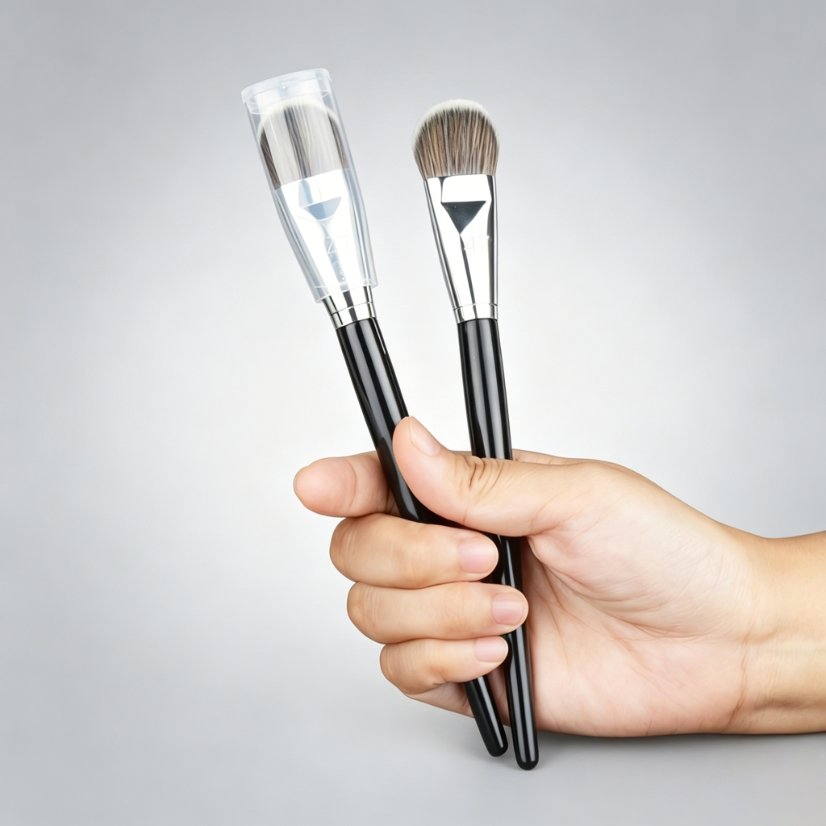
Foundation Brush 47: Record Front and Side Profiles
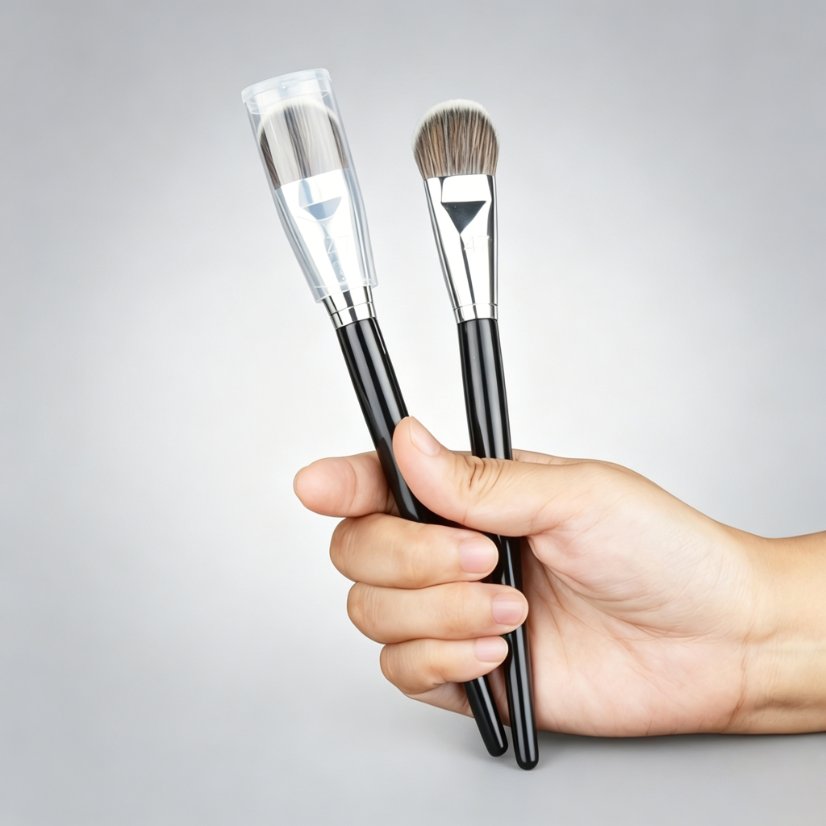
A foundation brush sample record should show the head from the front and side, identify the handle and ferrule, and state the agreed measurement points. For BYM’s 47 reference, retain the complete sample and its photographs together. One face view cannot fully describe the head profile or confirm the supplied protective components.
A broad front view can hide how thin or rounded a brush head appears from the side. Two purchasing teams may therefore approve different interpretations of a similar foundation brush photograph. This guide focuses on recording a specific sample identity for wholesale foundation brushes, so a reorder refers to the same shape rather than a general application name.
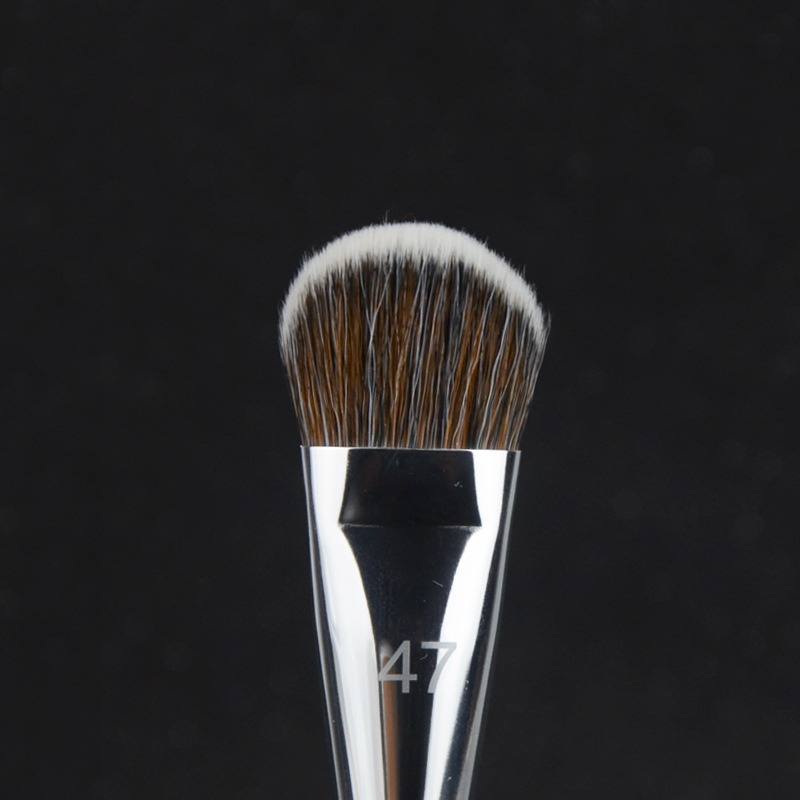
Begin with the exact 47 reference
BYM’s 47 Foundation Brush listing supplies a concrete model reference and gallery views. Use that reference in the sample request, then give the received sample its own tracking code. The model name helps identify the discussion; it does not replace the physical sample or an agreed drawing where dimensions matter.
Keep the complete brush identified while reviewing its parts. The head, ferrule and handle form one supplied tool, and an isolated close-up can lose that connection. Record whether a photograph shows the same sample from another direction or an alternative configuration that still needs its own review.
- Exact listing and physical sample code
- Labeled front and side views
- Agreed length and width measurement points
- Handle, ferrule and protector identity
Use front and side views for different questions
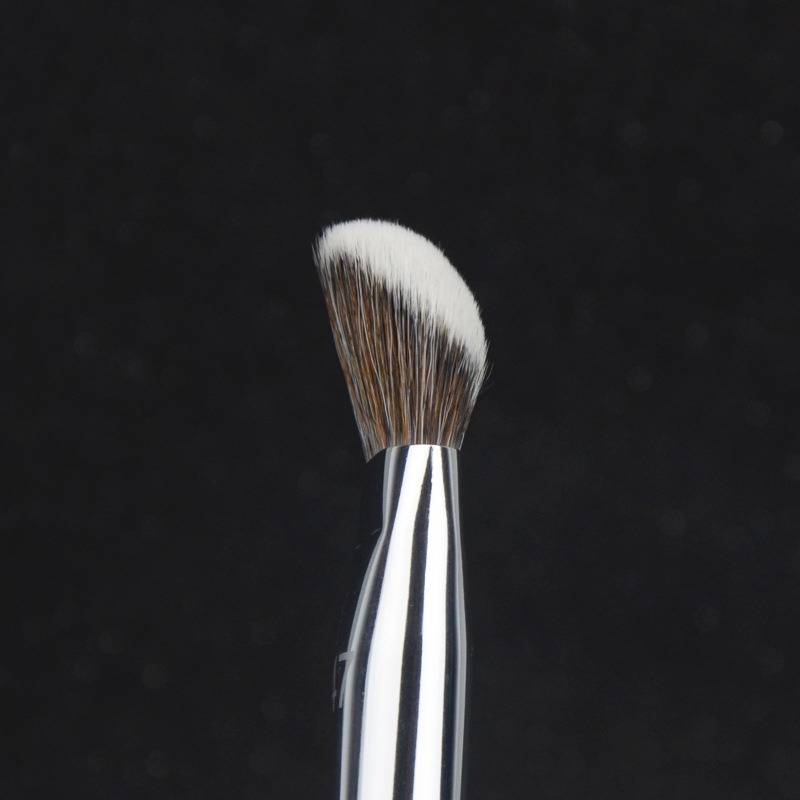
The front view helps describe the visible head outline, while the side view shows another aspect of its profile. Request both with the brush held in a consistent orientation. Label the views clearly, so a supplier can understand whether a buyer is commenting on the face outline, thickness profile or alignment with the handle.
Use photographs as identity aids rather than measurement substitutes. Perspective and camera distance can change apparent proportions. If a particular head width or profile matters, ask the supplier to confirm a measurement method and reference drawing. Keep that information linked to the sample instead of deriving exact dimensions from pixels.
| Evidence | What it describes | What still needs confirmation |
|---|---|---|
| Front view | Visible head outline and handle relationship | Dimensions at agreed reference points |
| Side view | Head profile from another direction | Any required shape-specific drawing |
| Complete packed sample | Brush and supplied protection together | Which components the quotation includes |
Agree where each dimension begins and ends
A request for brush length needs clear endpoints. Distinguish overall tool length from handle length and exposed bristle length. Likewise, identify whether a width refers to the ferrule or the head at a defined location. These distinctions make a specification interpretable without inventing tolerances or treating similar wording as an exact standard.
Ask the supplier to mark the requested measurement points on a drawing or sample photograph. Review any proposed alternative using the same points. A different head outline should not be described as identical just because its overall length is similar; the record should preserve the shape features relevant to the buyer’s selected item.
Identify the handle and protective presentation
Record the handle color, visible finish and ferrule presentation alongside the head profile. The gallery includes a brush shown with a transparent cap, which makes the supplied protective presentation a useful confirmation question. Ask whether that cap is included with the offered unit and how the brush will be individually packed.
If a cap or sleeve is supplied, review it with the selected brush sample and record how it is fitted. Do not assume it is interchangeable with protectors from other models. The purchasing record should identify included components and their presentation without interpreting a transparent cover as evidence of a particular cleanliness or safety classification.
Keep appearance review separate from application evidence
The physical identity record establishes which sample was reviewed. If the buyer also wants to assess an application result, identify the cosmetic product and evaluation conditions separately. A photograph of the head cannot prove how every foundation formula will behave with it or establish a universal finished appearance.
After review, retain the approved sample code, views and agreed drawing with the purchase order. For repeat supply, refer to that complete record. If the supplier proposes a change in shape, handle or protective presentation, request an updated comparison rather than letting a familiar model number conceal a revised configuration.
Frequently Asked Questions
Is a front photograph enough to define the brush?
It shows one useful view, but the side profile can reveal a different aspect of the head. Keep both views tied to the same complete physical sample and reference code.
Can exact head dimensions be taken from an image?
Do not use an uncalibrated catalogue image as a measurement standard. Ask the supplier to confirm the required dimensions and their endpoints using an agreed drawing or sample method.
Is the transparent cap necessarily included?
Confirm it in the offer. A gallery view can illustrate a presentation option, so the included-parts record should identify any cap or sleeve supplied with the selected brush.
Does accepting the shape approve every application claim?
No. Sample identity and application evaluation answer separate questions. Any requested application assessment should identify the cosmetic formula and review conditions rather than relying on appearance alone.
Browse BYM foundation and makeup tools and the custom brush design article for wider product context. Send the sample reference and required views through BYM contact. Additional sourcing topics are in the BYM blog.