
Angled Brush RFQs: Define the Ferrule Join
For an angled foundation brush RFQ, ask the supplier to identify the handle-to-ferrule join and describe the attachment used in the offered version. Request a matching drawing or marked sample reference, then separate visible joint appearance from any retention-performance requirement. BYM’s Champagne Gold listing names an ABS handle and aluminum ferrule; those material fields do not explain how the two are connected.
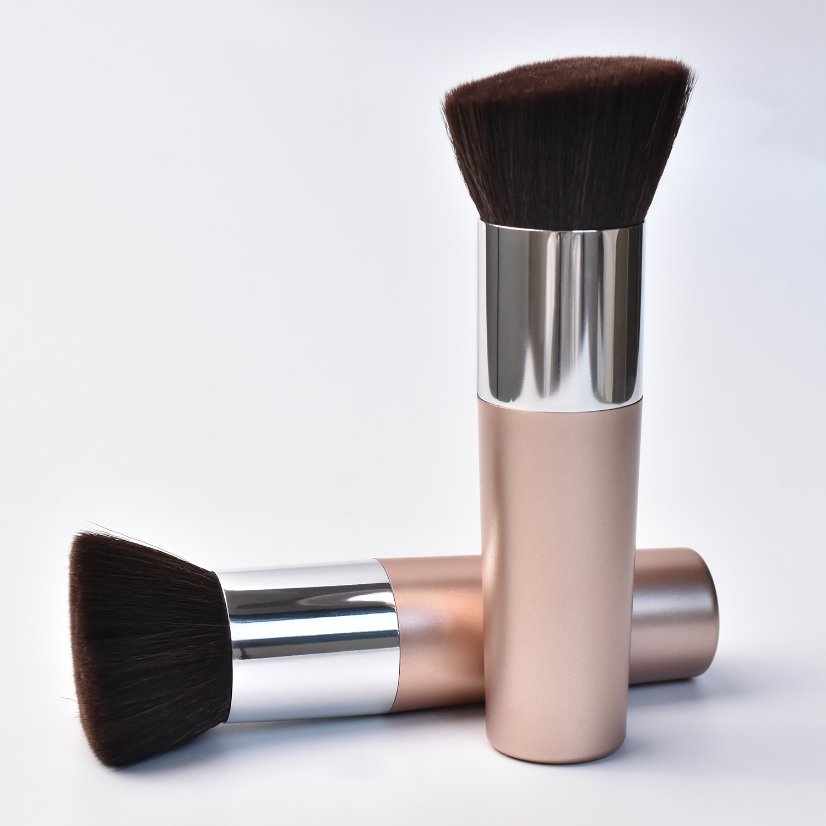
Official two-brush catalogue arrangement. The visible boundary identifies the handle and ferrule area for enquiry; it does not reveal the internal attachment or prove retention strength.
Ask how the named components are connected
The Champagne Gold Angled Foundation Brush listing identifies an ABS handle, aluminum ferrule and synthetic fibre bristles in its material line. For a wholesale enquiry, that description names components but does not explain the attachment between the handle and ferrule. Ask the supplier to describe that join for the actual version being quoted.
Attach the product link and a marked catalogue reference locating the boundary. Use the supplier’s component names in the response. This prevents a material declaration or an attractive metallic appearance from being treated as an explanation of the internal assembly.
Request a joint reference rather than guessing the process
Ask for an attachment description with a drawing, section reference or marked sample explanation that the supplier considers appropriate. Request enough information to understand which surfaces or features form the join. The supplier should identify the proposed construction instead of the buyer inferring a process from the outside boundary.
If the response uses an assembly term that remains unclear, ask how it applies to this particular handle and ferrule. Keep the explanation with its source reference. Do not add an assumed adhesive, crimp, thread or other attachment method merely because it is familiar from a different brush.
Joint field
Supplier clarification
Purchasing purpose
Components
Offered handle and ferrule references
Identify the actual assembly
Attachment
Description of the connection
Understand the proposed construction
Joint reference
Relevant drawing or marked explanation
Connect words to the physical area
Sample identity
Sample matching that description
Review one defined version
Another official arrangement from the same angled-brush listing. Use the different orientation to identify the joint under discussion, without inferring its dimensions or joining process.
Define any dimensions by their actual reference points
Where an attachment dimension matters to the purchase, ask the supplier to identify the measurement points and unit on its reference. A visible outside line may not identify the internal boundary the supplier is describing. Keep external appearance dimensions separate from an internal attachment dimension.
Request clarification before transferring a value into the quotation annex. Do not estimate an insertion depth from the length of the visible ferrule or assume that the pictured brush provides a scale. A complete response connects the named value to the correct part of the offered assembly.
Keep visible joint appearance as its own decision
Use an identified sample to discuss the outside boundary between the handle and ferrule. Ask the supplier to show the joint area in the relevant orientation and retain the reference used for the appearance decision. If a visible step, gap or alignment matters, mark the exact location and agree how it will be assessed.
This is a different question from approving the silver or champagne-coloured surface finish. Keep a finish reference beside its own scope, while the joint record identifies the component relationship being reviewed. A revised surface treatment should not silently replace the description of the attachment underneath it.
Official catalogue styling reference with a brush, foundation bottle and sponge. The styling objects and printed cosmetic claims are not supplied brush components, compatibility evidence or claims adopted in this article.
Separate the attachment description from performance evidence
A supplier’s drawing or assembly explanation describes the proposed join. It is not, by itself, a retention or durability result. If the buyer requires a particular functional evaluation, state the requirement separately and ask what supporting evidence the supplier can provide for the identified version.
Record the component scope, sample or item reference, and the conditions stated in any evidence supplied. Do not create a force value, testing procedure or general strength promise from a catalogue photograph. Keep an unresolved performance requirement visible rather than treating a completed material line as its answer.
Connect the explanation to the sample and quotation
Request the sample identifier that corresponds to the attachment description. During sample review, note whether the offered component references and the documented external joint arrangement agree. Return any specific discrepancy with a marked photograph and a question about the relevant feature.
Name the selected brush and offered version.
Identify the handle-to-ferrule area consistently.
Retain the supplier’s attachment explanation and drawing reference.
Keep appearance and performance decisions distinguishable.
For a component substitution, ask whether the attachment description changes. Review the revised proposal against its own references instead of carrying the previous approval forward because the assembled brush looks similar at a distance.
Send a focused attachment enquiry
Ask: “For the quoted Champagne Gold Angled Foundation Brush, please describe the handle-to-ferrule attachment and identify a matching drawing or sample reference. Please separate the visible joint arrangement from any supporting retention evidence.” Send it through the supplier contact page. The makeup-tool articles provide wider purchasing context while this reply defines the specific assembly question.
Frequently asked questions
Does the material line define the attachment?
It names the supplier’s component materials. Request the connection description and relevant reference for the offered assembly.
Can the visible ferrule length establish insertion depth?
Ask the supplier to mark the actual measurement points on its drawing or explanation. Do not calculate an internal dimension from an outside photograph.
What if the supplier changes a component?
Request the revised attachment reference and clarify whether the existing sample, appearance decision or evidence remains applicable.
Foundation brushesFerrule attachmentAssembly specifications