Brush Set RFQs: Define the Synthetic Fibre Scope
For a professional brush-set enquiry, request the supplier’s filament material declaration and identify which brush heads it covers. Ask separately about mixtures, gradient colour and other working ends. Link the response to the offered version and sample, leaving unsupported composition or product claims open.
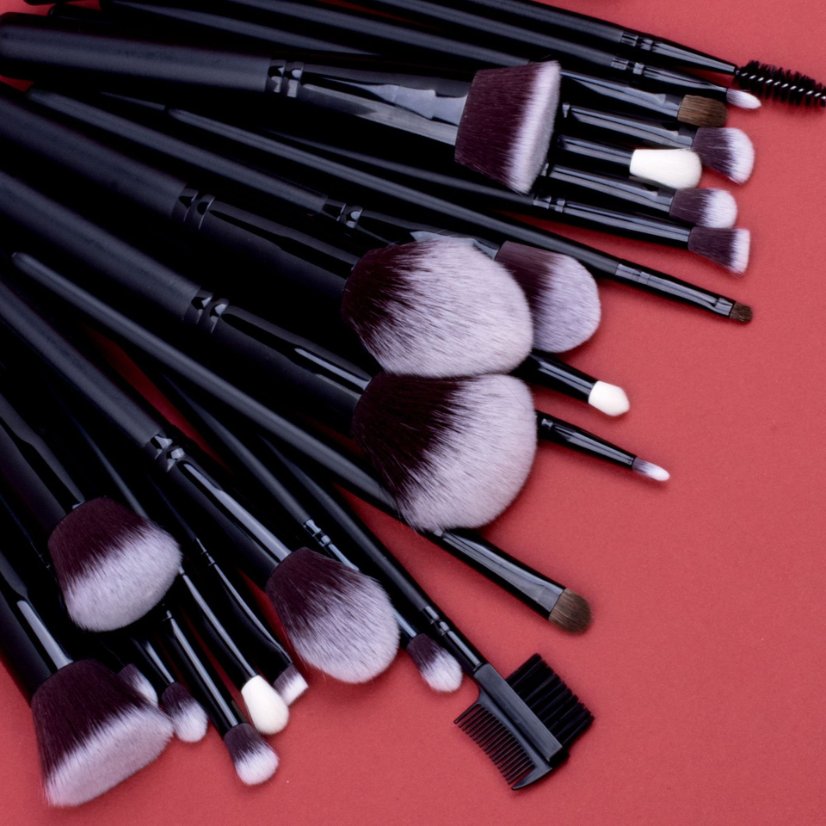
Official product-page close reference showing several working ends. Colour and shape identify questions for the supplier; they do not establish filament composition or the material of other applicator tips.
Start with the offered brush-set identity
BYM’s professional synthetic brush-set listing describes gradient synthetic-fibre bristles, wooden handles and aluminium ferrules. The page title uses 27Pcs while its descriptive paragraph refers to a 24-piece kit. Ask the supplier to identify the exact offered version before attaching a fibre declaration to it; this enquiry does not resolve that difference by counting photographs.
For wholesale professional makeup brush sets, synthetic fibre is a starting material description rather than a complete specification. Request the supplier’s actual filament declaration and the brush heads it covers. A useful response links the material description to identifiable working ends within the offered set, with any exceptions stated separately.
Define what the synthetic-fibre statement covers
Ask whether all bristled heads in the offered version use the same declared filament material. If different heads use different materials or mixtures, request a separate description for each relevant group. Keep the supplier’s material name and any established specification reference together instead of replacing them with a familiar polymer name.
The photographs show several head shapes, a comb-and-brush form and light-coloured applicator tips. Ask the supplier which components its bristle statement covers. Do not extend a fibre declaration automatically to comb teeth, an applicator tip, the handle or the ferrule. Each component needs its own applicable description if it matters to the purchase.
Identify the offered set and relevant brush-head references.
Request the declared filament material and any mixture information.
State which other working ends fall outside that declaration.
Official catalogue arrangement for the offered-set enquiry. Confirm the actual version because the page uses different piece-count wording; this image is not a verified contents schedule.
Use a head-by-head material response
A purchasing table can keep the requested scope clear without becoming another catalogue count sheet. Use the supplier’s item references or marked images to identify the relevant heads. Ask the supplier to group identical material specifications and explain exceptions where the proposed set contains more than one.
Material enquiry field
Supplier response requested
Applicable head
Item reference or marked working-end image
Filament declaration
Material name and relevant supplier specification
Mixture scope
Whether the head contains one declared material or a stated mixture
Colour description
Meaning of the gradient or two-tone appearance
Exceptions
Other working ends and their separate material descriptions
Supporting reference
Document and sample applying to the quoted version
If the response describes a mixture, ask how the supplier states its composition and which head reference it concerns. An unanswered proportion should remain open. The table should preserve the actual declaration rather than suggesting that the buyer has independently identified the fibre from its appearance.
Keep gradient colour separate from composition
The listing describes gradient synthetic-fibre bristles, and the product images show contrasting dark and light areas on several heads. Ask the supplier what that colour description means for the offered filament. Visible colour zones alone do not identify the polymer, a blend proportion or the presence of another type of hair.
Request the applicable material information for the selected sample, then keep any appearance approval alongside it. A buyer can accept the visible colour effect while still waiting for a material clarification. Recording those decisions separately prevents a catalogue-style approval from being treated as a completed composition check.
If the supplier offers an alternative filament or changes a head specification, request an updated response with the affected item reference. Keep alternatives identifiable rather than assuming that a broadly similar gradient head has the same material as the original proposal.
Official product-page styling reference with a colour palette. The palette is not established as included, and the photograph supplies no independently verified material or application result.
Connect documents and samples to the actual offer
Ask which supplier document supports the filament declaration and what product or component reference it identifies. Where a document concerns a raw material, ask the supplier to explain how it relates to the head proposed for this order. Retain that link with the sample reference so the purchasing team can understand the scope of the response.
A sample review can compare the identified working ends and their visible arrangement. It does not independently prove polymer identity, animal-origin status, softness, shedding, application performance or suitability for sensitive skin. Obtain any additional evidence required for those separate product claims rather than deriving them from synthetic wording.
The catalogue also uses vegan and cruelty-free language. Those terms should remain separate evidence questions for any buyer intending to use them in a product description. A bristle-only material statement does not by itself define the status of every component, process or claim associated with the complete set.
Retain the agreed declaration for repeat purchases
Attach the accepted head references, material response and sample identifiers to the quotation. Ask the supplier to flag a proposed change to filament material or the affected working end before reusing that approval for another order. A clear component reference makes the change understandable without relying on the set’s general appearance.
The practical result is an offered set with a defined fibre-declaration scope. Purchasing colleagues can see which bristled heads it covers, which other ends have separate descriptions and which questions remain unresolved.
Frequently asked questions
Does synthetic identify a particular polymer?
The reviewed product wording does not name one. Request the supplier’s actual material declaration rather than assigning a polymer.
Does two-tone mean two different fibre materials?
Appearance alone does not establish that. Ask the supplier to explain the colour description and any material mixture separately.
Where should the enquiry go?
Send the product link and material table through the supplier contact page. Use the blog separately for other sourcing topics.
Synthetic Brush FibreMaterial ScopeB2B Brush Sets